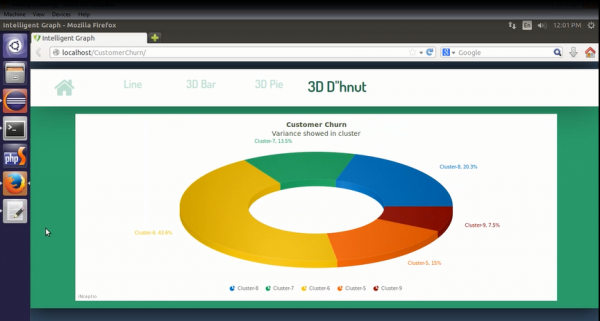
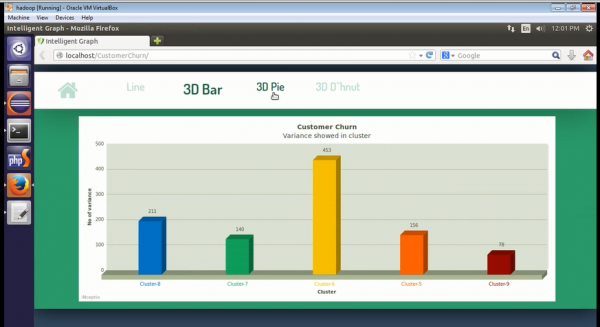
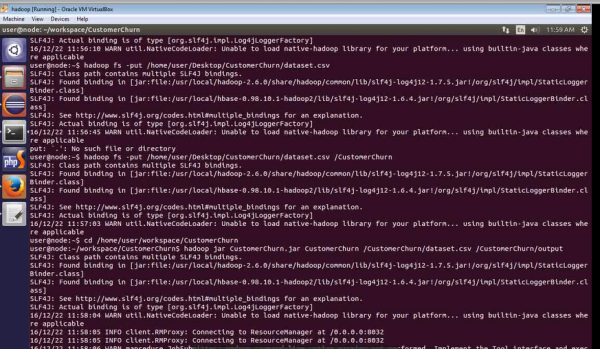
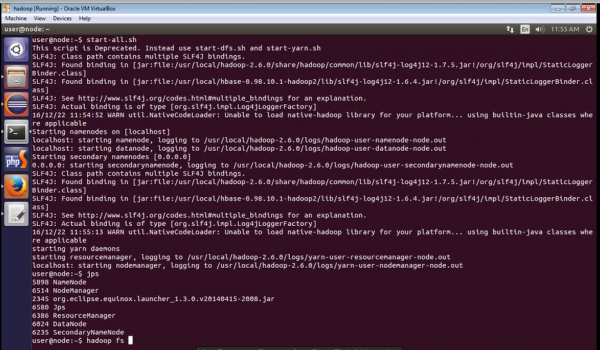
Features of the A Big Data Clustering Algorithm For Mitigating The Risk Of Customer Churn project
We will implement the following feature in the Java Spring Framework A Big Data Clustering Algorithm For Mitigating The Risk Of Customer Churn Project:
As market competition intensifies, customer churn
management is increasingly becoming an important means of
competitive advantage for companies. However, when dealing
with big data in the industry, existing churn prediction models
cannot work very well. In addition, decision makers are always
faced with imprecise operations management. In response to these
difficulties, a new clustering algorithm called Semantic Driven
Subtractive Clustering Method (SDSCM) is proposed.
Experimental results indicate that SDSCM has stronger
clustering semantic strength than Subtractive Clustering Method
(SCM) and fuzzy c-means (FCM). Then a parallel SDSCM
algorithm is implemented through a Hadoop MapReduce
framework. In the case study, the proposed parallel SDSCM
algorithm enjoys a fast running speed when compared with the
other methods. Furthermore, We provide some marketing
strategies in accordance with the clustering results, and a
simplified marketing activity is simulated to ensure profit
maximization.
User modules and function of A Big Data Clustering Algorithm For Mitigating The Risk Of Customer Churn
We will implement the following functionalities in the Java Spring Framework A Big Data Clustering Algorithm For Mitigating The Risk Of Customer Churn Project:
Software requirement to run this project
Java Development Kit (JDK) Version: Java 8 or higher (Java 11 or Java 17 is recommended as of 2024 for LTS support).
Spring Framework
IDE: Eclipse, IntelliJ IDEA, or VS Code with Java and Spring Boot extensions.
Database: MySQL, PostgreSQL or MongoDB.
Application Server : Need a web server like Apache Tomcat or Jetty.
Hardware requirement to run this project
Processor (CPU):
Minimum: 2-core processor (e.g., Intel Core i3 or equivalent)
Recommended: 4-core or better (e.g., Intel Core i5/i7, AMD Ryzen 5/7)
RAM (Memory):
Minimum: 8 GB of RAM
Recommended: 16 GB of RAM (especially if running Docker, multiple services, or heavy IDEs)
Hard Disk:
Minimum: 50 GB of free disk space (SSD is recommended for faster performance)
Recommended: 100 GB or more (for large projects or multiple repositories)
Display:
Minimum: 1080p resolution (1920x1080) for better productivity, especially if using modern IDEs with multiple panes (for coding, testing, etc.)
Recommended: Dual monitors for multitasking (optional but helpful)
Operating System:
Windows 10/11, macOS, or Linux (Ubuntu, CentOS, etc.)
Linux is often preferred for server-side development due to its compatibility with Spring and deployment environments.
How to install the project?
After you finish downloading the project, unzip the project file.
Why a download A Big Data Clustering Algorithm For Mitigating The Risk Of Customer Churn project from kashipara?
Downloading the A Big Data Clustering Algorithm For Mitigating The Risk Of Customer Churn project from Kashipara is a best choice for students, beginners, and developers looking for a reliable, well documented, and ready to use project in Java Spring Framework.
Top benifit to Download our project over other website:
- Our A Big Data Clustering Algorithm For Mitigating The Risk Of Customer Churn Source Code in Java Spring Framework completly working. This project easy to understand and fully customizable as per your requriments.
- Free Download our A Big Data Clustering Algorithm For Mitigating The Risk Of Customer Churn projects.
- Comprehensive Documentation:
- We provide project Synopsis
- A Big Data Clustering Algorithm For Mitigating The Risk Of Customer Churn project Abstract in PDF and PPT formats download in reports.
- Detailed Project Report
- UML & Technical Diagrams Included:
- This project Ideal for Academic Projects Perfect for B.E., B.Tech, MCA, BCA, BSc CS, and IT students
- 100% Working Project – Tested and bug free.
- Developed for Learning & Research – A strong foundation for building advanced A Big Data Clustering Algorithm For Mitigating The Risk Of Customer Churn applications
How to create diagram?
Creating diagrams like Class Diagrams, Use Case Diagrams, Entity–Relationship (ER) Diagrams, Data Flow Diagrams (DFD), and Sequence Diagrams is essential for designing and understanding software systems. Here’s a proper guide to help you get started with each type: